Once introduced to the international automobile market, Toyota Fortuner Facelift India ready to be presented in early 2012.
Currently, Toyota Fortuner Facelift is being produced which will be marketed in New Delhi, India. So that was launched Motorbeam, Sunday (09/18/2011).
Latest Fortuner for the Indian market is more mature than Toyota's SUV family. Engine options are still using the 3.0-liter motor, but there autobox which is a differentiator from previous generations.
Fortuner is available in two variants, manual and automatic. The plan is available for the 4x2 version is sold at lower prices Indian automotive market.
Fortuner also features a touch screen system for DVD, front and rear lights with a display and the latest technology, as well as rear bember more elegant.
As a matter of price, Toyota is still secret. But before the sale in the Indian market, this car will be exhibited first at the Auto Expo 2012 event in January 2012.
Showing posts with label toyota. Show all posts
Tuesday, September 20, 2011
Friday, September 2, 2011
Toyota Camry Daytona 500 Pace Car
Toyota Motor Sales, U.S.A., Inc. (TMS) and Daytona International Speedway (DIS) announced the all-new 2012 Toyota Camry will serve as the official pace car for next year's DAYTONA 500®.
Toyota will showcase the new Camry -- the best-selling car in America for nine years running -- at Daytona in 'The Great American Race,' Feb. 26, 2012. The race annually kicks-off the NASCAR Sprint Cup Series season.
"We're thrilled to be able to feature the new Camry in Daytona at the season's biggest race," said Ed Laukes, TMS corporate manager of motorsports marketing. "We think the DAYTONA 500 is the perfect place to showcase the all-new Toyota Camry -- which will go on sale this fall. We knew when the opportunity arose to partner together with Daytona that it would be an extraordinary way to highlight our new Camry, as well as reinforce Toyota's commitment to NASCAR and its fans."
Toyota Camry went on sale in 1983 and since then more than nine million have been sold in the U.S. Camry has been the best selling car in America for 13 of the past 14 years.
This year marks the 25th anniversary of Camry production in Georgetown, Ky. Toyota began manufacturing the Camry in Georgetown in 1986 and the vehicle is now also built in Lafayette, Ind.
The 2012 Camry debuts a bold, sophisticated new design with a more spacious interior, improved driving dynamics and an even quieter ride than before. The new model features class leading safety, fuel economy and multi-media technology.
"NASCAR and Daytona International Speedway provide a uniquely American platform for manufacturers to display their technology, innovation and overall automotive excellence," said Daytona International Speedway President Joie Chitwood III. "After nearly eight years of competing at NASCAR's highest level, I'm pleased to have the 2012 Toyota Camry pace the DAYTONA 500."
Toyota has previously provided pace vehicles at several NASCAR tracks, including Auto Club Speedway of Southern CaliforniaSM, Charlotte Motor Speedway, Chicagoland Speedway®, Dover (Del.) International Speedway, California's Infineon Raceway, Kansas Speedway®, Martinsville (Va.) Speedway®, Nashville Superspeedway, New Hampshire Motor Speedway, Phoenix International Raceway®, Richmond (Va.) International Raceway®, Wisconsin's Road America and Watkins Glen (N.Y.) International®.
In 2004, Toyota began participating in NASCAR competition by fielding Tundras in the NASCAR Camping World Truck Series (NCWTS). Three years later in 2007, Toyota began competing in the NSCS and the NASCAR Nationwide Series (NNS) with the Camry.
Toyota has won three consecutive manufacturer's titles in the NNS (2008-2010) with the Camry, and Toyota racers have earned one driver's title (Kyle Busch in 2009) and registered 60 race victories in the NNS. In NSCS competition, Camry drivers have earned 36 first-place trophies.
In seven seasons participating in the NCWTS, Toyota has captured five consecutive manufacturer's championships (2006-2010), and Tundra drivers have won driver's titles with Todd Bodine (2006 and 2010) and Johnny Benson (2008), and have earned 88 race wins.
At Daytona International Speedway, Toyota drivers have recorded eight NASCAR wins across NASCAR's three national touring series, including one NSCS win (Kyle Busch in 2008), two NNS wins (Denny Hamlin in 2008 and Tony Stewart in 2008) and five NCWTS wins. In 2008, Hamlin claimed Toyota's first-ever NSCS victory in a non-points qualifying event to determine the Daytona 500 starting lineup.
Toyota will showcase the new Camry -- the best-selling car in America for nine years running -- at Daytona in 'The Great American Race,' Feb. 26, 2012. The race annually kicks-off the NASCAR Sprint Cup Series season.
"We're thrilled to be able to feature the new Camry in Daytona at the season's biggest race," said Ed Laukes, TMS corporate manager of motorsports marketing. "We think the DAYTONA 500 is the perfect place to showcase the all-new Toyota Camry -- which will go on sale this fall. We knew when the opportunity arose to partner together with Daytona that it would be an extraordinary way to highlight our new Camry, as well as reinforce Toyota's commitment to NASCAR and its fans."
Toyota Camry went on sale in 1983 and since then more than nine million have been sold in the U.S. Camry has been the best selling car in America for 13 of the past 14 years.
This year marks the 25th anniversary of Camry production in Georgetown, Ky. Toyota began manufacturing the Camry in Georgetown in 1986 and the vehicle is now also built in Lafayette, Ind.
The 2012 Camry debuts a bold, sophisticated new design with a more spacious interior, improved driving dynamics and an even quieter ride than before. The new model features class leading safety, fuel economy and multi-media technology.
"NASCAR and Daytona International Speedway provide a uniquely American platform for manufacturers to display their technology, innovation and overall automotive excellence," said Daytona International Speedway President Joie Chitwood III. "After nearly eight years of competing at NASCAR's highest level, I'm pleased to have the 2012 Toyota Camry pace the DAYTONA 500."
Toyota has previously provided pace vehicles at several NASCAR tracks, including Auto Club Speedway of Southern CaliforniaSM, Charlotte Motor Speedway, Chicagoland Speedway®, Dover (Del.) International Speedway, California's Infineon Raceway, Kansas Speedway®, Martinsville (Va.) Speedway®, Nashville Superspeedway, New Hampshire Motor Speedway, Phoenix International Raceway®, Richmond (Va.) International Raceway®, Wisconsin's Road America and Watkins Glen (N.Y.) International®.
In 2004, Toyota began participating in NASCAR competition by fielding Tundras in the NASCAR Camping World Truck Series (NCWTS). Three years later in 2007, Toyota began competing in the NSCS and the NASCAR Nationwide Series (NNS) with the Camry.
Toyota has won three consecutive manufacturer's titles in the NNS (2008-2010) with the Camry, and Toyota racers have earned one driver's title (Kyle Busch in 2009) and registered 60 race victories in the NNS. In NSCS competition, Camry drivers have earned 36 first-place trophies.
In seven seasons participating in the NCWTS, Toyota has captured five consecutive manufacturer's championships (2006-2010), and Tundra drivers have won driver's titles with Todd Bodine (2006 and 2010) and Johnny Benson (2008), and have earned 88 race wins.
At Daytona International Speedway, Toyota drivers have recorded eight NASCAR wins across NASCAR's three national touring series, including one NSCS win (Kyle Busch in 2008), two NNS wins (Denny Hamlin in 2008 and Tony Stewart in 2008) and five NCWTS wins. In 2008, Hamlin claimed Toyota's first-ever NSCS victory in a non-points qualifying event to determine the Daytona 500 starting lineup.
Thursday, August 25, 2011
Toyota Camry Daytona 500 Pace Car
Toyota Motor Sales, U.S.A., Inc. (TMS) and Daytona International Speedway (DIS) announced the all-new 2012 Toyota Camry will serve as the official pace car for next year's DAYTONA 500®.
Toyota will showcase the new Camry -- the best-selling car in America for nine years running -- at Daytona in 'The Great American Race,' Feb. 26, 2012. The race annually kicks-off the NASCAR Sprint Cup Series season.
"We're thrilled to be able to feature the new Camry in Daytona at the season's biggest race," said Ed Laukes, TMS corporate manager of motorsports marketing. "We think the DAYTONA 500 is the perfect place to showcase the all-new Toyota Camry -- which will go on sale this fall. We knew when the opportunity arose to partner together with Daytona that it would be an extraordinary way to highlight our new Camry, as well as reinforce Toyota's commitment to NASCAR and its fans."
Toyota Camry went on sale in 1983 and since then more than nine million have been sold in the U.S. Camry has been the best selling car in America for 13 of the past 14 years.
This year marks the 25th anniversary of Camry production in Georgetown, Ky. Toyota began manufacturing the Camry in Georgetown in 1986 and the vehicle is now also built in Lafayette, Ind.
The 2012 Camry debuts a bold, sophisticated new design with a more spacious interior, improved driving dynamics and an even quieter ride than before. The new model features class leading safety, fuel economy and multi-media technology.
"NASCAR and Daytona International Speedway provide a uniquely American platform for manufacturers to display their technology, innovation and overall automotive excellence," said Daytona International Speedway President Joie Chitwood III. "After nearly eight years of competing at NASCAR's highest level, I'm pleased to have the 2012 Toyota Camry pace the DAYTONA 500."
Toyota has previously provided pace vehicles at several NASCAR tracks, including Auto Club Speedway of Southern CaliforniaSM, Charlotte Motor Speedway, Chicagoland Speedway®, Dover (Del.) International Speedway, California's Infineon Raceway, Kansas Speedway®, Martinsville (Va.) Speedway®, Nashville Superspeedway, New Hampshire Motor Speedway, Phoenix International Raceway®, Richmond (Va.) International Raceway®, Wisconsin's Road America and Watkins Glen (N.Y.) International®.
In 2004, Toyota began participating in NASCAR competition by fielding Tundras in the NASCAR Camping World Truck Series (NCWTS). Three years later in 2007, Toyota began competing in the NSCS and the NASCAR Nationwide Series (NNS) with the Camry.
Toyota has won three consecutive manufacturer's titles in the NNS (2008-2010) with the Camry, and Toyota racers have earned one driver's title (Kyle Busch in 2009) and registered 60 race victories in the NNS. In NSCS competition, Camry drivers have earned 36 first-place trophies.
In seven seasons participating in the NCWTS, Toyota has captured five consecutive manufacturer's championships (2006-2010), and Tundra drivers have won driver's titles with Todd Bodine (2006 and 2010) and Johnny Benson (2008), and have earned 88 race wins.
At Daytona International Speedway, Toyota drivers have recorded eight NASCAR wins across NASCAR's three national touring series, including one NSCS win (Kyle Busch in 2008), two NNS wins (Denny Hamlin in 2008 and Tony Stewart in 2008) and five NCWTS wins. In 2008, Hamlin claimed Toyota's first-ever NSCS victory in a non-points qualifying event to determine the Daytona 500 starting lineup.
Toyota will showcase the new Camry -- the best-selling car in America for nine years running -- at Daytona in 'The Great American Race,' Feb. 26, 2012. The race annually kicks-off the NASCAR Sprint Cup Series season.
"We're thrilled to be able to feature the new Camry in Daytona at the season's biggest race," said Ed Laukes, TMS corporate manager of motorsports marketing. "We think the DAYTONA 500 is the perfect place to showcase the all-new Toyota Camry -- which will go on sale this fall. We knew when the opportunity arose to partner together with Daytona that it would be an extraordinary way to highlight our new Camry, as well as reinforce Toyota's commitment to NASCAR and its fans."
Toyota Camry went on sale in 1983 and since then more than nine million have been sold in the U.S. Camry has been the best selling car in America for 13 of the past 14 years.
This year marks the 25th anniversary of Camry production in Georgetown, Ky. Toyota began manufacturing the Camry in Georgetown in 1986 and the vehicle is now also built in Lafayette, Ind.
The 2012 Camry debuts a bold, sophisticated new design with a more spacious interior, improved driving dynamics and an even quieter ride than before. The new model features class leading safety, fuel economy and multi-media technology.
"NASCAR and Daytona International Speedway provide a uniquely American platform for manufacturers to display their technology, innovation and overall automotive excellence," said Daytona International Speedway President Joie Chitwood III. "After nearly eight years of competing at NASCAR's highest level, I'm pleased to have the 2012 Toyota Camry pace the DAYTONA 500."
Toyota has previously provided pace vehicles at several NASCAR tracks, including Auto Club Speedway of Southern CaliforniaSM, Charlotte Motor Speedway, Chicagoland Speedway®, Dover (Del.) International Speedway, California's Infineon Raceway, Kansas Speedway®, Martinsville (Va.) Speedway®, Nashville Superspeedway, New Hampshire Motor Speedway, Phoenix International Raceway®, Richmond (Va.) International Raceway®, Wisconsin's Road America and Watkins Glen (N.Y.) International®.
In 2004, Toyota began participating in NASCAR competition by fielding Tundras in the NASCAR Camping World Truck Series (NCWTS). Three years later in 2007, Toyota began competing in the NSCS and the NASCAR Nationwide Series (NNS) with the Camry.
Toyota has won three consecutive manufacturer's titles in the NNS (2008-2010) with the Camry, and Toyota racers have earned one driver's title (Kyle Busch in 2009) and registered 60 race victories in the NNS. In NSCS competition, Camry drivers have earned 36 first-place trophies.
In seven seasons participating in the NCWTS, Toyota has captured five consecutive manufacturer's championships (2006-2010), and Tundra drivers have won driver's titles with Todd Bodine (2006 and 2010) and Johnny Benson (2008), and have earned 88 race wins.
At Daytona International Speedway, Toyota drivers have recorded eight NASCAR wins across NASCAR's three national touring series, including one NSCS win (Kyle Busch in 2008), two NNS wins (Denny Hamlin in 2008 and Tony Stewart in 2008) and five NCWTS wins. In 2008, Hamlin claimed Toyota's first-ever NSCS victory in a non-points qualifying event to determine the Daytona 500 starting lineup.
Tuesday, August 16, 2011
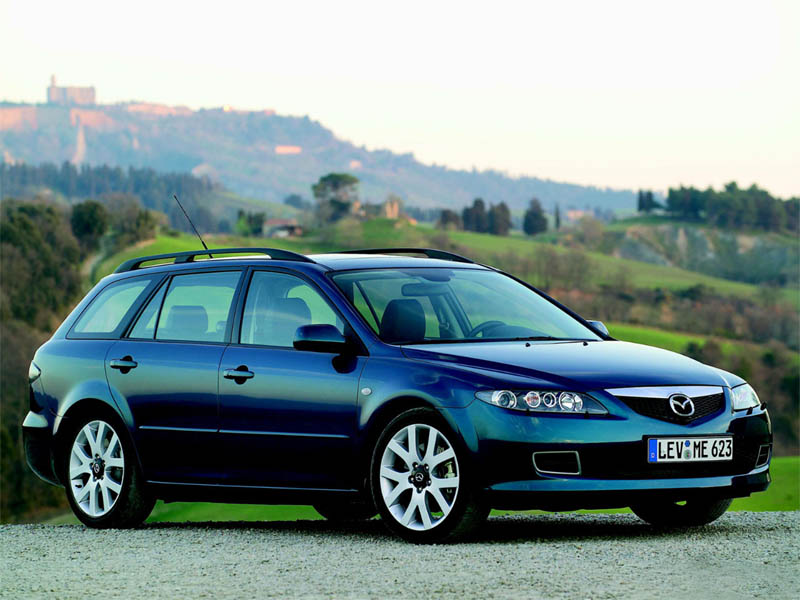
Mazda 6 Wagon
Exterior design appeal combined with a spacious and functional interior is one of the current Mazda 6's strongest selling points. Mazda's new family face is introduced with the updated model for a strong, sporty look that's carried out in solid build quality. On the inside, a number of changes to the interior make the cabin even more reined. There are new decorative surfaces, new materials for the dash and steering wheel, new upholstery and colour combinations.
Exterior Design
New fog lamps bezels are introduced that are more pointed and lowing. These bezels frame an "inner eye" made up of a round fog lamp inside a lowing lower lid for a strong sense of refinement. There are also newly-designed headlamps , and an upper grille with a new winged Mazda logo that is black on all grades and body-coloured on the Sports Grade. Deeply etched character lines running up from the grille between the fenders and the bonnet complete the most athletic Mazda 6 front ever.
The winged motifs from the front are repeated by the rear combination lamps that have new chrome- plated winged decorations that make the lamps look wider and seem to low even further into the side panels. The lamps themselves are a combination of clear lenses and LEDs . Mazda 6 facelift also gets stylish new 17- and 18-inch aluminium wheel designs that twist slightly for a very sporty, three- dimensional look. These not only enhance the silhouette with a premium look, they are also one kilogram lighter than the wheels of the previous model.
Exterior Design
New fog lamps bezels are introduced that are more pointed and lowing. These bezels frame an "inner eye" made up of a round fog lamp inside a lowing lower lid for a strong sense of refinement. There are also newly-designed headlamps , and an upper grille with a new winged Mazda logo that is black on all grades and body-coloured on the Sports Grade. Deeply etched character lines running up from the grille between the fenders and the bonnet complete the most athletic Mazda 6 front ever.
The winged motifs from the front are repeated by the rear combination lamps that have new chrome- plated winged decorations that make the lamps look wider and seem to low even further into the side panels. The lamps themselves are a combination of clear lenses and LEDs . Mazda 6 facelift also gets stylish new 17- and 18-inch aluminium wheel designs that twist slightly for a very sporty, three- dimensional look. These not only enhance the silhouette with a premium look, they are also one kilogram lighter than the wheels of the previous model.
Monday, August 8, 2011
Nissan Versa Sedan
Compact sedans are all the rage, with a host of new entries from both domestic and import manufacturers reaching showrooms recently. Nissan will cash in on that popularity with the 2012 Versa sedan, debuting today at the New York auto show with refreshed styling and tweaks to improve fuel economy.
The 2012 Versa rides on an evolution of the last car's platform called V, for Versatile. The sedan's wheelbase and width are unchanged from the current model, but it loses about an inch of length and height. Despite this, Nissan says that packaging improvements for the engine and transaxle mean there is more trunk space. The new car also should be marginally lighter than before.
Styling-wise, the new Versa takes cues from the larger Altima and Maxima sedans, starting with a new grille design and oval-shaped headlights, and continued with a smoother rear and reshaped taillights that sweep from the rear bumper to the Versa's rear haunches. The hood and sides are broken up by an assortment of creased character lines akin to those seen on the Hyundai Elantra. Whereas the old Versa had a more conventional flat roof and steep rear window, the new car's roofline gently slopes toward the trunk, following the coupe-like trend. The exterior changes reportedly help achieve a low 0.31 drag coefficient.
Sunday, July 31, 2011
2011 Mercedes-Benz Viano Vision Pearl Concept
The design concept is takes its inspiration from that of modern sporting yachts, with the theme of travel as an experience. The onboard W-LAN connectivity caters for the needs of modern, mobile individuals. For ther exterior design, Mercedes-Benz has for the first time in the van sector used the paint finish “magno pearl grey”, a matt, pebble-grey colour. The stylistically revised front end of the Viano with its integrated LED daytime running lamps gives the van a more sporty, powerful appearance
The interior of the Viano Vision Pearl is not so much a functional space for passenger transport, but rather a living space. The name Vision Pearl emphasises both the design concept and the repositioning of the Viano: the Viano of the future is the perfect travelling companion, and in this version it conveys a modern, maritime theme.
The Viano Vision Pearl is rounded off by the Bang & Olufsen sound system. Mercedes-Benz has worked together with this world-renowned manufacturer of audio systems since 2009, and integrates the high-end sound systems into passenger cars such as the S-Class. Thanks to the very high output of 1320 watts (the S-Class has 1200 watts) and 18 integrated, specially hand-built loudspeakers, the vehicle occupants are treated to an outstanding listening experience. The Viano Vision Pearl is stylishly discreet where the outside world is concerned: as the loudspeakers are located in their own housings, very little sound volume escapes to the outside.
The interior of the Viano Vision Pearl is not so much a functional space for passenger transport, but rather a living space. The name Vision Pearl emphasises both the design concept and the repositioning of the Viano: the Viano of the future is the perfect travelling companion, and in this version it conveys a modern, maritime theme.
The Viano Vision Pearl is rounded off by the Bang & Olufsen sound system. Mercedes-Benz has worked together with this world-renowned manufacturer of audio systems since 2009, and integrates the high-end sound systems into passenger cars such as the S-Class. Thanks to the very high output of 1320 watts (the S-Class has 1200 watts) and 18 integrated, specially hand-built loudspeakers, the vehicle occupants are treated to an outstanding listening experience. The Viano Vision Pearl is stylishly discreet where the outside world is concerned: as the loudspeakers are located in their own housings, very little sound volume escapes to the outside.
Jaguar XKR-S
Making its debut at the 2011 Geneva Motor Show, the Jaguar XKR-S is the most extreme expression yet of Jaguar's passion for building beautiful, fast cars. For the first time with a series production car, Jaguar gains entry to the exclusive '300kph club' thanks to the effortless performance of the supercharged 5.0-litre AJ-V8 engine. A revised fuelling map means the direct-injection powerplant now produces 550PS and 680Nm of torque. Extensive recalibration has ensured that power delivery and performance are seamless, contributing to a 0-60mph time of 4.2 seconds. The Performance active exhaust encourages and rewards the enthusiastic driver with dramatic, motorsport-inspired aural feedback.
The Jaguar XKR-S is not merely the quickest Jaguar ever but also the most agile, responsive and driver-focused. The pinnacle of the XK range builds on feedback gathered from the supercharged XKR and has been developed to extend the performance parameters of the car. This new harder-edged character allows the enthusiastic driver to explore the outer limits of the car's dynamics without losing the refinement and usability for which Jaguar is famous. The structural integrity of the lightweight aluminium platform allowed the suspension to be reworked with bespoke components for increased stiffness without a commensurate loss in either refinement or Jaguar's legendary ride comfort. A reworked aluminium front suspension knuckle and revised rear geometry are allied to stiffer springs and dampers, lightweight forged alloy wheels and recalibrated steering effort to minimise any response delays and produce a more connected and agile driving experience.
Saturday, July 16, 2011
Toyota Hilux
The renowned Toyota Hilux continues to dominate European pick-up sales. Vehicle sales totalled 21,866 in 2010, representing almost 25% of the market share. This makes the Toyota pick-up the segment sales leader for the third consecutive year.
With the launch of the 2012 Hilux, Toyota introduces a new design and further improves the model's renowned quality, durability and reliability.
The 2012 Toyota Hilux's new interior has been extensively revised with a refined design which reinforces the pick-up's credentials as a leisure vehicle. It offers improved sensory quality throughout the cabin, and passenger car levels of convenience.
The interior features a new upper dashboard design in which a new, horizontal centre instrument cluster reinforces the breadth and roominess of the cabin. It incorporates Toyota Touch, a 6.1", full colour, touch screen multimedia unit.
Perceived quality has been significantly improved through the adoption of uniformly darker finishes with a greater colour consistency throughout the interior, and the addition of silver ornamentation.
The front of the 2012 Toyota Hilux is entirely redesigned from the A pillar forwards, with a new bonnet, radiator grille, headlamps and front bumper. The vehicle profile is further enhanced by newly designed front and rear wings, redesigned 15" and 17" steel and alloy wheels, and new door mirrors.
In order to create a stronger differentiation between 'workhorse', 'dual usage' and 'leisure' versions, the 2012 Hilux is now available in four grades: DLX, the new DLX+, SR and SR+.
Fulfilling a 'workhorse'/'dual usage' role, the brand new DLX+ grade is available with 2WD or 4WD 2.5 D-4D powertrains mated to a manual transmission in Single Cab, Extra Cab and Double Cab body styles, and with a 4WD 3.0 D-4D powertrain and manual transmission as a Double Cab only.
With a choice of three body types, two engines, manual and automatic transmission and two- or four-wheel drive, Europe's pick-up of choice now satisfies the requirements of an even wider professional and leisure customer base.
Through the introduction of variable nozzle turbocharging, 2012 Toyota Hilux 2WD 2.5 D-4D models benefit from a 24 hp increase in power. The engine now develops 144 hp at 3600 rpm and 343 Nm of torque at 2000 rpm.
Despite this power increase, combined cycle fuel consumption has been reduced by 1.0 l/100 km to 7.3 l/100 km and CO2 emissions lowered by 26 g/km to only 193 g/km.
In addition, 2012 Toyota Hilux 2WD versions are now equipped with the more robust chassis design of 4WD models. This not only improves vehicle ground clearance, but also increases the two-wheel drive models' towing capacity to 2.5 tons.
Thanks to the adoption of a Diesel Particulate Filter (DPF) both 2.5 D-4D and 3.0 D-4D engines are now EURO V compliant.
Produced at Toyota Motor Thailand and Toyota South Africa Motors, the 2012 Toyota Hilux will be available in 36 European countries, and more than 135 throughout the world.
With the launch of the 2012 Hilux, Toyota introduces a new design and further improves the model's renowned quality, durability and reliability.
The 2012 Toyota Hilux's new interior has been extensively revised with a refined design which reinforces the pick-up's credentials as a leisure vehicle. It offers improved sensory quality throughout the cabin, and passenger car levels of convenience.
The interior features a new upper dashboard design in which a new, horizontal centre instrument cluster reinforces the breadth and roominess of the cabin. It incorporates Toyota Touch, a 6.1", full colour, touch screen multimedia unit.
Perceived quality has been significantly improved through the adoption of uniformly darker finishes with a greater colour consistency throughout the interior, and the addition of silver ornamentation.
The front of the 2012 Toyota Hilux is entirely redesigned from the A pillar forwards, with a new bonnet, radiator grille, headlamps and front bumper. The vehicle profile is further enhanced by newly designed front and rear wings, redesigned 15" and 17" steel and alloy wheels, and new door mirrors.
In order to create a stronger differentiation between 'workhorse', 'dual usage' and 'leisure' versions, the 2012 Hilux is now available in four grades: DLX, the new DLX+, SR and SR+.
Fulfilling a 'workhorse'/'dual usage' role, the brand new DLX+ grade is available with 2WD or 4WD 2.5 D-4D powertrains mated to a manual transmission in Single Cab, Extra Cab and Double Cab body styles, and with a 4WD 3.0 D-4D powertrain and manual transmission as a Double Cab only.
With a choice of three body types, two engines, manual and automatic transmission and two- or four-wheel drive, Europe's pick-up of choice now satisfies the requirements of an even wider professional and leisure customer base.
Through the introduction of variable nozzle turbocharging, 2012 Toyota Hilux 2WD 2.5 D-4D models benefit from a 24 hp increase in power. The engine now develops 144 hp at 3600 rpm and 343 Nm of torque at 2000 rpm.
Despite this power increase, combined cycle fuel consumption has been reduced by 1.0 l/100 km to 7.3 l/100 km and CO2 emissions lowered by 26 g/km to only 193 g/km.
In addition, 2012 Toyota Hilux 2WD versions are now equipped with the more robust chassis design of 4WD models. This not only improves vehicle ground clearance, but also increases the two-wheel drive models' towing capacity to 2.5 tons.
Thanks to the adoption of a Diesel Particulate Filter (DPF) both 2.5 D-4D and 3.0 D-4D engines are now EURO V compliant.
Produced at Toyota Motor Thailand and Toyota South Africa Motors, the 2012 Toyota Hilux will be available in 36 European countries, and more than 135 throughout the world.
Sunday, June 26, 2011
Ford Fiesta
Ford's hot-selling new Ford Fiesta will deliver more than just great looks and top fuel economy of any vehicle in its segment when it goes on sale in North America in 2010. The 2011 Fiesta - available in four- and five-door body styles - also will set a new small car benchmark for safety, connectivity and powertrain technology.
In fact, Ford Fiesta will offer North American buyers a stylish new choice of 15 class-exclusive technologies and projected highway fuel economy of 40 mpg, besting the Honda Fit, Nissan Versa and Toyota Yaris and Corolla.
"Customers are savvy. They want expressive cars that deliver not just great fuel economy but also high quality, new technologies and a fun driving experience," said Mark Fields, Ford president of The Americas. "We plan to answer the call with Ford Fiesta; an all-new vehicle in North America we hope will set a new standard for small cars."
Ford Fiesta is the next milestone under the ONE Ford plan to design and develop vehicles that meet the differing needs, wants and expectations of customers around the world. More than 500,000 Fiestas have already sold to customers in Europe and Asia.
When developing the new Fiesta, Ford conducted extensive global customer research. Findings clearly indicated the need for style topped the list of customer desires everywhere in the world. In Europe, across North America and in the Asia Pacific region, customers are looking for a distinctively designed small car that offers world-class quality, convenience, comfort and connectivity.
"Ford Fiesta was developed with customers, not just for them," said Derrick Kuzak, group vice president for global product development. "Fuel economy, spirited performance and efficient use of space are universal desires, across global markets - and Ford Fiesta delivers."
The anticipated new Ford Fiesta arrives in North America with strong consumer awareness, thanks to the Fiesta Movement program. With 100 social media mavens chronicling their experiences of driving European market Fiestas on American roads, Fiesta has generated more than 675,000 Flickr views and more than 5.5 million YouTube video views.
Kinetics and aesthetics
Kinetic design imparts a sense of movement - even while standing still - harmonizing character elements to reflect global Ford identity, enabling Ford Fiesta to project its own air of confidence, style and individuality. Fiesta targets a youthful "design progressive" mind-set, a consumer group that values style and diversity as worthy assets.
"These influential, prospective Ford Fiesta customers relate to the design philosophy of 'energy in motion' because it reflects their personal outlook and lifestyle," said Kevin George, Ford Fiesta design manager.
Up front, Ford Fiesta sports the global Ford face, centering the Blue Oval badge on the grille over the signature inverted trapezoid lower grille opening. These subtle cues engender familiarity across the portfolio, providing aesthetic linkage between the distinctive new Ford Taurus, the fuel-efficient midsize Fusion and the bold Fiesta.
Adding eyes to the Ford Fiesta face are sweeping, elongated headlamps that frame and connect the hood to muscular, sculpted front fenders. Available in sporty five-door hatchback or four-door sedan body styles, Ford Fiesta provides ample space for occupants and their gear.
At the rear of the car, many design elements merge, including the chamfered rear liftgate glass, the low roofline sweeping into a spoiler and dramatic taillamps with honeycomb detailing mounted high in the five-door's corners. Muscular rear quarter panels, wrapped tightly, draw the eye to the wheels and Ford Fiesta's confident stance.
The Ford Fiesta design is further enhanced with a choice of nine vivid new colors. From Bright Magenta through Lime Squeeze to Blue Flame, Fiesta's broad color palette - more available colors than any other segment competitors - instills vibrant individuality.
Inside Ford Fiesta
Ford Fiesta is as dramatic on the inside as it is on the outside. Boldly sculpted surfaces, contrasting colors and comfortable, supportive materials make the interior as individual as the driver.
The instrument panel centerstack - focal point of the new Fiesta interior - was designed to feel as useful and familiar as the keypad on a mobile phone.
The North American Ford Fiesta features first-row bucket seats with a 60/40 split second-row seat. Cloth or leather seating surfaces vary by trim level offering comfort, style and individuality. High series Ford Fiestas also offer leather with sporty contrast accent color piping.
Soft, sculptured surfaces and the centerstack layout provide the Ford Fiesta with a sense of harmony. Intuitive switchgear placement, comfort zone seating and available ambient lighting allow a driver to maximize the mood with seven complementary colors - switchable among three levels of intensity - for interior accent lighting.
And Ford Fiesta keeps it green; 25 percent of volume-series SE seat fabric inserts are comprised of recycled content.
Fun, with fuel efficiency
Ford Fiesta's flowing sculpted hood covers a 1.6-liter DOHC I-4 engine with an estimated 119 horsepower and 109 ft.-lbs. of torque. Spirited performance and fuel-efficient economy are signature attributes with the Ford Fiesta expected to deliver best-in-class fuel economy at 40 mpg.
Ford Fiesta's advanced 1.6-liter engine features Twin Independent Variable Camshaft Timing (Ti-VCT) allowing the engine to be downsized for fuel economy while continuously optimizing camshaft phasing for throttle response, performance and flexibility.
Big results from a small package are possible with several new technologies in this new global engine, including an advanced new front end accessory drive (FEAD) belt with stretchy dynamics to improve the engine's thermal dynamics. The elasticity in this new drive belt eliminates the need for a belt tensioner and contributes to overall fuel economy.
Ford Fiesta features a standard five-speed manual transaxle with gear ratios selected to offer spirited off-the-line performance and exceptional fuel economy for drivers who desire three pedals and a stick shift to maximize driving experience.
Specially tuned front struts, bushings, dampers, stabilizer bars and a rear twist-beam axle keep Ford Fiesta sure-footed and firmly planted. Sporty, European driving dynamics prevail.
Automatically game-changing
An available all-new North American industry-exclusive PowerShift six-speed automatic transmission combines the responsive performance and fuel economy of a manual transmission with the convenience of a traditional automatic in one advanced, dual dry-clutch package.
"Fuel economy leaders have traditionally been manual shift models," said Pierro Aversa, team leader for transmissions. "Ford Fiesta changes the game by offering an advanced PowerShift six-speed automatic that delivers maximum fuel economy."
Twin internal clutches keep the PowerShift in constant mesh, always optimizing for maximum responsiveness or fuel efficiency, depending on input received from the driver's foot on the accelerator pedal.
This "dry" transmission operates with sealed internal lubrication, reducing internal friction and adding to Ford Fiesta fuel economy. The lack of pumps and hoses reduces under-hood complexity, saves weight and also contributes to fuel efficiency.
PowerShift has been proven in Ford's European market and will redefine North American small car segment expectations for responsive shifting and fuel efficiency.
Power steering conserves fuel
For confidence-inspiring on-road dynamics, Ford Fiesta features Electric Power Assist Steering (EPAS) which reduces complexity while saving weight and fuel. This advanced system is speed-sensitive - providing optimized assist based on speed, cornering forces and acceleration or deceleration.
Ford is aggressively moving to EPAS across its product lineup. The system already is available in several Ford, Lincoln and Mercury nameplates, and by 2013 nearly 90 percent of Ford's lineup will offer this fuel saving technology.
EPAS also includes Pull-Drift Compensation to help Ford Fiesta track true regardless of road crown or side wind conditions. In addition, active nibble control helps detect and compensate for tire balance irregularity. Both features - enabled by EPAS - are class-exclusives.
Strength, safety, quality and quiet
More than 50 percent of Ford Fiesta's welded body structure is made from high-strength steel, with ultra-strong boron steel used in several critical areas. This rigid body shell contributes to Fiesta's confident road-holding, best-in-class occupant safety and quiet composure.
Ford Fiesta safety is enhanced by an array of features including dual-stage first-row air bags, a class-exclusive driver's knee air bag, side air bags and side curtain air bags. AdvanceTrac® with ESC (Electronic Stability Control) is standard on Ford Fiesta, along with seat belt pretensioners, rear door child safety locks and a Safety Canopy® system.
Tested and proven on virtually every continent where you can drive a car, Ford Fiesta arrives with proven quality and customer readiness.
"For North America, the global Ford Fiesta was tweaked, not re-designed or re-developed." said Steve Pintar, chief engineer. "We built on the success of the European Ford Fiesta and are really proud of how little has changed."
Fiesta NVH (noise, vibration and harshness) control is taken to a new level of quiet for this segment, helped in part by a specially laminated, class-exclusive windshield that was chosen to help absorb and contain noise. Engine noise is subdued by a hood blanket, with enhanced door seals keeping wind noise minimized.
Special padding behind the instrument panel and foam baffles mounted inside the pillars keeps Ford Fiesta quiet. Even the headliner material was specified for its sound-deadening qualities.
Much of Ford Fiesta's sound-absorbent materials are comprised of recycled content, helping to conserve resources as it preserves peace and quiet. In addition, Ford Fiesta aerodynamics contributes to both NVH control and fuel efficiency.
Features and functionality
From class-exclusive automatic climate control to a standard aux input, Ford Fiesta offers customers a number of standard and available features that increase convenience and add connectivity. Among them is Ford SYNC®, integrating a driver's mobile phone with Fiesta's onboard, voice- activated communications and entertainment system.
Ford Fiesta also offers keyless entry and push button start, a feature unique within the segment. Drivers of all sizes can adjust the tilt-and-telescoping steering wheel to suit their individual preferences. Reflecting Ford Fiesta's versatility and adaptability, adjustable cup holders can accommodate Red Bull cans and Big Gulps along with every container size in between.
Ford Fiesta also features Ford's EasyFuel® Capless Fuel-Filler System, a North American industry- exclusive, as standard equipment.
Ford Fiesta sales success
Ford Fiesta is continuing its sales momentum as Europe's No. 2-selling car and Ford of Europe's top-selling vehicle, helping increase Ford's share in Europe's main 19 markets. More than 500,000 Fiestas have been sold since the car was launched last autumn. In Europe, the Fiesta name has long been synonymous with outstanding drive quality, design and value. It's winning enthusiastic media reviews in Asia. Now, the all-new Ford Fiesta offers North American consumers a stylish, fuel-efficient alternative.
In fact, Ford Fiesta will offer North American buyers a stylish new choice of 15 class-exclusive technologies and projected highway fuel economy of 40 mpg, besting the Honda Fit, Nissan Versa and Toyota Yaris and Corolla.
"Customers are savvy. They want expressive cars that deliver not just great fuel economy but also high quality, new technologies and a fun driving experience," said Mark Fields, Ford president of The Americas. "We plan to answer the call with Ford Fiesta; an all-new vehicle in North America we hope will set a new standard for small cars."
Ford Fiesta is the next milestone under the ONE Ford plan to design and develop vehicles that meet the differing needs, wants and expectations of customers around the world. More than 500,000 Fiestas have already sold to customers in Europe and Asia.
When developing the new Fiesta, Ford conducted extensive global customer research. Findings clearly indicated the need for style topped the list of customer desires everywhere in the world. In Europe, across North America and in the Asia Pacific region, customers are looking for a distinctively designed small car that offers world-class quality, convenience, comfort and connectivity.
"Ford Fiesta was developed with customers, not just for them," said Derrick Kuzak, group vice president for global product development. "Fuel economy, spirited performance and efficient use of space are universal desires, across global markets - and Ford Fiesta delivers."
The anticipated new Ford Fiesta arrives in North America with strong consumer awareness, thanks to the Fiesta Movement program. With 100 social media mavens chronicling their experiences of driving European market Fiestas on American roads, Fiesta has generated more than 675,000 Flickr views and more than 5.5 million YouTube video views.
Kinetics and aesthetics
Kinetic design imparts a sense of movement - even while standing still - harmonizing character elements to reflect global Ford identity, enabling Ford Fiesta to project its own air of confidence, style and individuality. Fiesta targets a youthful "design progressive" mind-set, a consumer group that values style and diversity as worthy assets.
"These influential, prospective Ford Fiesta customers relate to the design philosophy of 'energy in motion' because it reflects their personal outlook and lifestyle," said Kevin George, Ford Fiesta design manager.
Up front, Ford Fiesta sports the global Ford face, centering the Blue Oval badge on the grille over the signature inverted trapezoid lower grille opening. These subtle cues engender familiarity across the portfolio, providing aesthetic linkage between the distinctive new Ford Taurus, the fuel-efficient midsize Fusion and the bold Fiesta.
Adding eyes to the Ford Fiesta face are sweeping, elongated headlamps that frame and connect the hood to muscular, sculpted front fenders. Available in sporty five-door hatchback or four-door sedan body styles, Ford Fiesta provides ample space for occupants and their gear.
At the rear of the car, many design elements merge, including the chamfered rear liftgate glass, the low roofline sweeping into a spoiler and dramatic taillamps with honeycomb detailing mounted high in the five-door's corners. Muscular rear quarter panels, wrapped tightly, draw the eye to the wheels and Ford Fiesta's confident stance.
The Ford Fiesta design is further enhanced with a choice of nine vivid new colors. From Bright Magenta through Lime Squeeze to Blue Flame, Fiesta's broad color palette - more available colors than any other segment competitors - instills vibrant individuality.
Inside Ford Fiesta
Ford Fiesta is as dramatic on the inside as it is on the outside. Boldly sculpted surfaces, contrasting colors and comfortable, supportive materials make the interior as individual as the driver.
The instrument panel centerstack - focal point of the new Fiesta interior - was designed to feel as useful and familiar as the keypad on a mobile phone.
The North American Ford Fiesta features first-row bucket seats with a 60/40 split second-row seat. Cloth or leather seating surfaces vary by trim level offering comfort, style and individuality. High series Ford Fiestas also offer leather with sporty contrast accent color piping.
Soft, sculptured surfaces and the centerstack layout provide the Ford Fiesta with a sense of harmony. Intuitive switchgear placement, comfort zone seating and available ambient lighting allow a driver to maximize the mood with seven complementary colors - switchable among three levels of intensity - for interior accent lighting.
And Ford Fiesta keeps it green; 25 percent of volume-series SE seat fabric inserts are comprised of recycled content.
Fun, with fuel efficiency
Ford Fiesta's flowing sculpted hood covers a 1.6-liter DOHC I-4 engine with an estimated 119 horsepower and 109 ft.-lbs. of torque. Spirited performance and fuel-efficient economy are signature attributes with the Ford Fiesta expected to deliver best-in-class fuel economy at 40 mpg.
Ford Fiesta's advanced 1.6-liter engine features Twin Independent Variable Camshaft Timing (Ti-VCT) allowing the engine to be downsized for fuel economy while continuously optimizing camshaft phasing for throttle response, performance and flexibility.
Big results from a small package are possible with several new technologies in this new global engine, including an advanced new front end accessory drive (FEAD) belt with stretchy dynamics to improve the engine's thermal dynamics. The elasticity in this new drive belt eliminates the need for a belt tensioner and contributes to overall fuel economy.
Ford Fiesta features a standard five-speed manual transaxle with gear ratios selected to offer spirited off-the-line performance and exceptional fuel economy for drivers who desire three pedals and a stick shift to maximize driving experience.
Specially tuned front struts, bushings, dampers, stabilizer bars and a rear twist-beam axle keep Ford Fiesta sure-footed and firmly planted. Sporty, European driving dynamics prevail.
Automatically game-changing
An available all-new North American industry-exclusive PowerShift six-speed automatic transmission combines the responsive performance and fuel economy of a manual transmission with the convenience of a traditional automatic in one advanced, dual dry-clutch package.
"Fuel economy leaders have traditionally been manual shift models," said Pierro Aversa, team leader for transmissions. "Ford Fiesta changes the game by offering an advanced PowerShift six-speed automatic that delivers maximum fuel economy."
Twin internal clutches keep the PowerShift in constant mesh, always optimizing for maximum responsiveness or fuel efficiency, depending on input received from the driver's foot on the accelerator pedal.
This "dry" transmission operates with sealed internal lubrication, reducing internal friction and adding to Ford Fiesta fuel economy. The lack of pumps and hoses reduces under-hood complexity, saves weight and also contributes to fuel efficiency.
PowerShift has been proven in Ford's European market and will redefine North American small car segment expectations for responsive shifting and fuel efficiency.
Power steering conserves fuel
For confidence-inspiring on-road dynamics, Ford Fiesta features Electric Power Assist Steering (EPAS) which reduces complexity while saving weight and fuel. This advanced system is speed-sensitive - providing optimized assist based on speed, cornering forces and acceleration or deceleration.
Ford is aggressively moving to EPAS across its product lineup. The system already is available in several Ford, Lincoln and Mercury nameplates, and by 2013 nearly 90 percent of Ford's lineup will offer this fuel saving technology.
EPAS also includes Pull-Drift Compensation to help Ford Fiesta track true regardless of road crown or side wind conditions. In addition, active nibble control helps detect and compensate for tire balance irregularity. Both features - enabled by EPAS - are class-exclusives.
Strength, safety, quality and quiet
More than 50 percent of Ford Fiesta's welded body structure is made from high-strength steel, with ultra-strong boron steel used in several critical areas. This rigid body shell contributes to Fiesta's confident road-holding, best-in-class occupant safety and quiet composure.
Ford Fiesta safety is enhanced by an array of features including dual-stage first-row air bags, a class-exclusive driver's knee air bag, side air bags and side curtain air bags. AdvanceTrac® with ESC (Electronic Stability Control) is standard on Ford Fiesta, along with seat belt pretensioners, rear door child safety locks and a Safety Canopy® system.
Tested and proven on virtually every continent where you can drive a car, Ford Fiesta arrives with proven quality and customer readiness.
"For North America, the global Ford Fiesta was tweaked, not re-designed or re-developed." said Steve Pintar, chief engineer. "We built on the success of the European Ford Fiesta and are really proud of how little has changed."
Fiesta NVH (noise, vibration and harshness) control is taken to a new level of quiet for this segment, helped in part by a specially laminated, class-exclusive windshield that was chosen to help absorb and contain noise. Engine noise is subdued by a hood blanket, with enhanced door seals keeping wind noise minimized.
Special padding behind the instrument panel and foam baffles mounted inside the pillars keeps Ford Fiesta quiet. Even the headliner material was specified for its sound-deadening qualities.
Much of Ford Fiesta's sound-absorbent materials are comprised of recycled content, helping to conserve resources as it preserves peace and quiet. In addition, Ford Fiesta aerodynamics contributes to both NVH control and fuel efficiency.
Features and functionality
From class-exclusive automatic climate control to a standard aux input, Ford Fiesta offers customers a number of standard and available features that increase convenience and add connectivity. Among them is Ford SYNC®, integrating a driver's mobile phone with Fiesta's onboard, voice- activated communications and entertainment system.
Ford Fiesta also offers keyless entry and push button start, a feature unique within the segment. Drivers of all sizes can adjust the tilt-and-telescoping steering wheel to suit their individual preferences. Reflecting Ford Fiesta's versatility and adaptability, adjustable cup holders can accommodate Red Bull cans and Big Gulps along with every container size in between.
Ford Fiesta also features Ford's EasyFuel® Capless Fuel-Filler System, a North American industry- exclusive, as standard equipment.
Ford Fiesta sales success
Ford Fiesta is continuing its sales momentum as Europe's No. 2-selling car and Ford of Europe's top-selling vehicle, helping increase Ford's share in Europe's main 19 markets. More than 500,000 Fiestas have been sold since the car was launched last autumn. In Europe, the Fiesta name has long been synonymous with outstanding drive quality, design and value. It's winning enthusiastic media reviews in Asia. Now, the all-new Ford Fiesta offers North American consumers a stylish, fuel-efficient alternative.
Tuesday, June 21, 2011
Toyota Yaris
The third generation Toyota Yaris will be launched in the UK in summer 2011.
Developed from an original concept of "compact outside, spacious inside," new Yaris shows Toyota further improving the clever packaging that was a hallmark of its predecessors.
Moreover, it will mark a breakthrough in its segment for affordable multimedia connectivity with the introduction of Toyota Touch & Go. Due to be standard equipment on 95 per cent of sales. It features a 6.1-inch display with touch screen technology for ease of use and functionality.
Manufactured at Toyota's Valenciennes factory in France, new Yaris has been designed and engineered to deliver the highest possible build quality. Inside, high quality materials and surface finishes have been used, and there is a more driver-focused cockpit.
Three different low emissions, fuel-efficient Toyota Optimal Drive powertrains will be available: 1.0-litre VVT-i and 1.33-litre dual VVT-i petrol units and a 1.4-litre D-4D diesel.
Didier Leroy, President and CEO Toyota Motor Europe, said: "New Yaris represents Toyota's strongest offer yet in the important supermini segment. With its new levels of ingenuity, efficiency and quality, we are confident it can build upon Yaris's previous success and help Toyota rejuvenate its presence in Europe and move towards one million annual sales in the region in the medium term."
Developed from an original concept of "compact outside, spacious inside," new Yaris shows Toyota further improving the clever packaging that was a hallmark of its predecessors.
Moreover, it will mark a breakthrough in its segment for affordable multimedia connectivity with the introduction of Toyota Touch & Go. Due to be standard equipment on 95 per cent of sales. It features a 6.1-inch display with touch screen technology for ease of use and functionality.
Manufactured at Toyota's Valenciennes factory in France, new Yaris has been designed and engineered to deliver the highest possible build quality. Inside, high quality materials and surface finishes have been used, and there is a more driver-focused cockpit.
Three different low emissions, fuel-efficient Toyota Optimal Drive powertrains will be available: 1.0-litre VVT-i and 1.33-litre dual VVT-i petrol units and a 1.4-litre D-4D diesel.
Didier Leroy, President and CEO Toyota Motor Europe, said: "New Yaris represents Toyota's strongest offer yet in the important supermini segment. With its new levels of ingenuity, efficiency and quality, we are confident it can build upon Yaris's previous success and help Toyota rejuvenate its presence in Europe and move towards one million annual sales in the region in the medium term."
Saturday, April 16, 2011
2012 Toyota Camry Solara
You'll appreciate Solara's precise handling and effortless ride. And with the 2012 Toyota Camry Solara convertible, you'll look great doing it, wherever you go. Both the Solara and the Solara convertible are available in SE and SLE V-6 models, making the combinations virtually limitless.
The 2012 Toyota Camry Solara is available as a midsize coupe that seats 5 or convertible that seats 4. Both Solara styles are available in three models, SE, Sport and SLE. The fuel economy ratings of the Toyota Solara model powered by a four cylinder engine are 21 miles per gallon on city streets and 31 miles per gallon highway, while that of the V6 engine powered model are 18 miles per gallon on city streets and 26 miles per gallon highway for the coupe and 18 miles per gallon on city streets and 27 miles per gallon for the convertible highway.
All 2012 Solara models are equipped with air conditioning, powered windows/locks/mirrors, an AM/FM/CD/MP3 music system, leather seats, 17 inch tires, a cruise control system and a sun roof.
The 2012 "Toyota Camry" is the best car for you if you want the all-new version of a family-car icon.
The 2012 Toyota Camry will be the first fully redesigned Camry since model-year 2007. The redesigned 2012 model kicks off the seventh design generation of the Camry, a car that’s parlayed deceptively ordinary design into extraordinarily wide appeal.
Should you wait for the 2012 Toyota Camry or buy a 2011 Toyota Camry? Waiting for the 2012 Camry means your car’s styling will look current for several years, and it’ll be worth more at resale than the outgoing 2011 Camry. The 2011 Camry still is an outstanding family sedan. : For a preview of the 2012 Toyota Camry styling, look to themes evident on the Toyota Venza and the re-engineered 2011 Toyota Avalon. Venza is Toyota’s new-age crossover wagon. Avalon is essentially a stretched version of the Camry sedan. Both have design roots in Toyota’s midsize-car architecture. Look for the 2012 Camry to get some trendy “light-pipe” detail illumination front and rear. The "2012 Camry" probably will be slightly wider than the outgoing model. Toyota is, however, apt to stretch the 2012 Camry’s wheelbase. Camry is honed to achieve an impressive level of refinement. The 2012 Camry will retain front-wheel drive, which concentrates the mass of the engine and transmission in the nose of the car.
Front-wheel drive seldom matches the handling balance of rear-wheel drive. But Camry’s aim is a predictable, easy-to-drive nature. Under the hood, expect Toyota to replace the outgoing Camry’s 169-horsepower 2.5-liter four-cylinder with the notably stronger 2.7-liter four already available in the Venza; there, it’s rated at 182 horsepower. The possibility of a 2012 Toyota Camry Hybrid is an open question. All 2012 Camrys will come equipped with Toyota’s latest safety features. Also in place for the 2012 Camry will be Toyota’s new Star Safety System. Features: Expect the 2012 Toyota Camry to continue with the sort of model range that’s so effectively penetrated most every layer of the midsize-car firmament. It should again begin with an equivalent of the 2011 Camry’s CE model, which Toyota occasionally refers to as the “Standard” or “base” Camry.
Standard features on every" 2012 Toyota Camry" will include air conditioning, height-adjustable driver’s seat, tilt/telescoping steering wheel with audio controls, cruise control, and power windows, locks, and mirrors. That sort of connectivity is increasingly standard in Camry’s competitive set and has been available but not standard on all Camry models.
2012 Toyota Camry Prices
Pricing for the 2012 Toyota Camry won’t be announced until shortly before the car goes on sale, but a base price range of around $20,300-$29,900 is almost guaranteed. For 2011 Toyota cars, that fee is $750. In general, the 2012 Camry CE model should start around $21,400 with automatic transmission. Estimated base price for the 2012 Toyota Camry LE with the four-cylinder engine is around $22,000 with manual transmission, around $23,000 with automatic. The 2012 Camry LE with the V-6 engine would likely be priced from around $25,700 and come only with automatic transmission.
Toyota has wisely enabled buyers to purchase the top-line Camry model with the four-cylinder engine. That ought to continue, with the 2012 Camry XLE starting around $27,000. Leather upholstery as a standard features has been exclusive to the XLE V-6 Camry. If a gas-electric model is again part of the lineup, look for 2012 Toyota Camry Hybrid prices to start around $27,500.
The 2011 Camry with both the 169- and 179-horsepower versions of the four-cylinder engine was among the highest-mileage midsize cars, with EPA ratings of 22/33 mpg (city/highway) for manual transmission, 22/32 with the automatic.
Even if Toyota gives the 2012 Camry the 2.7-liter four-cylinder, these ratings should hold or even climb by a mile-per-gallon or two. In turn, expect the 2012 Toyota Camry with the 3.5-liter V-6 to benefit from similar upgrades given the latest versions of this engine. Toyota continues to use the 2011 Camry Hybrid’s powertrain in the $35,000 Lexus HS250h, which was introduced for model-year 2010 and is advertised as America’s first hybrid-only luxury car. If a 2012 Camry Hybrid returns with a similar setup, look for EPA ratings of at least 33/34 mpg
2011 Toyota
The Toyota Supra evolved from the Toyota Celica in 1979, finally becoming its very own model by the 3rd generation in 1986.
The M engine that was used in the first 3 generations of the Supra came from the Toyota 2000GT, an inline 6 cylinder.
The last year the Supra was produced was in 2002, but much earlier in America by 1998.
Subscribe to:
Posts (Atom)